
IRON ORE
IRON ORE
Imagine all the metal objects around you—from the car you drive to the phone in your hand to the building you’re in. Almost all of them started as one thing: a rock.
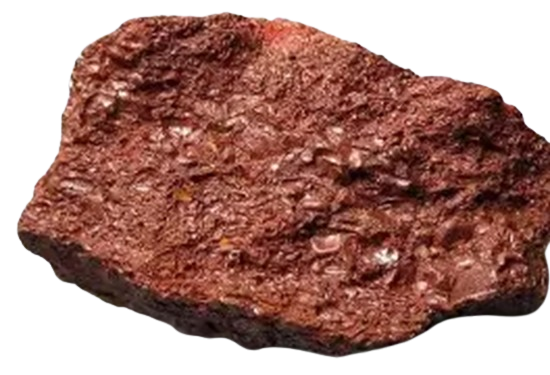
That rock is iron ore, and it’s nothing special to look at. Just a reddish-brown rock dug from the earth. But by heating it in a furnace with a little help from coal, we transform it into a glowing liquid that becomes the most important metal on the planet: steel.
Iron ore is the quiet foundation of our modern world. It’s the reason we can build skyscrapers, ships, and the very tools that allow us to advance. Without this humble rock, the industrial revolution and our entire technological age would have been impossible.
What is Iron ore?
Iron ore is a rock containing iron minerals that can be mined and processed to create metallic iron (Fe). It’s the primary raw material for the world’s iron and steel industries, with about 98% of all mined iron ore used for steel production. Without it, our modern world would look completely different, as steel is used to build everything from cars and ships to buildings and household appliances.
Types of Iron Ore
Iron ore isn’t just one type of rock; it’s a category of minerals that contain a significant amount of iron. The most common and economically important types are:
- Hematite: This is the most widely used iron ore. It’s reddish-brown in color and contains a high iron content (up to 70%).
- Magnetite: As the name suggests, this ore is magnetic and has a very high iron content (over 70%). It’s a dark, black mineral that is highly valued for its purity.
- Limonite and Siderite: These are lower-grade ores with less iron content and are less commonly used today.
Formation of Iron Ore
Billions of years ago, before there was a lot of oxygen in the atmosphere, the Earth’s oceans contained a vast amount of dissolved iron. At the same time, microscopic organisms, specifically cyanobacteria, evolved and began to perform photosynthesis. This process released oxygen as a waste product into the ocean.
This newly released oxygen immediately reacted with the dissolved iron in the seawater. The reaction caused the iron to become insoluble, meaning it could no longer stay dissolved in the water. Instead, it formed a solid, rust-like mineral (either hematite or magnetite) that sank to the seafloor in great abundance.
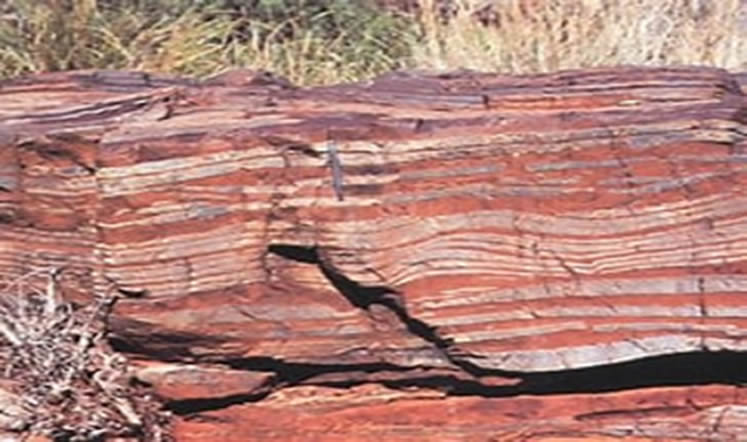
This process wasn’t continuous. It happened in cycles, with periods of high oxygen from the bacteria leading to the deposition of iron-rich layers, followed by periods of less oxygen, which led to the deposition of layers of silica (a mineral found in sand). This cyclical process created the unique, alternating red and gray layers we see in the most important type of iron ore deposit, called banded iron formations (BIFs).
These massive BIF deposits are the source of most of the world’s iron ore today.
Uses of Steel from Iron Ore
- Construction: Steel is a fundamental material for building everything from skyscrapers and bridges to stadiums and homes. Its strength and durability are essential for creating safe and long-lasting structures.
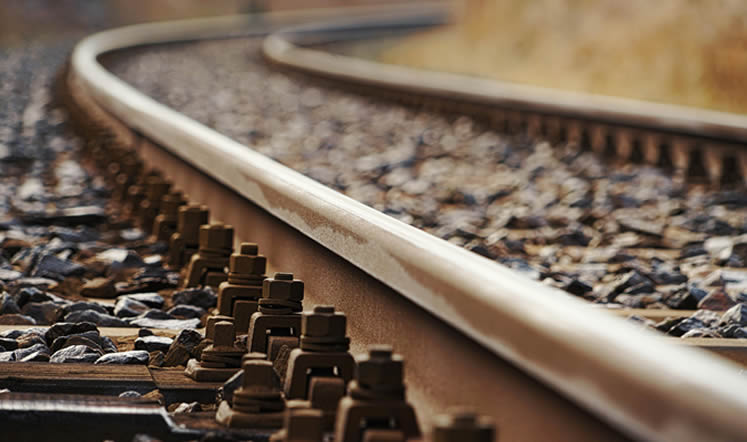
- Transportation: The automotive, shipbuilding, and railway industries rely heavily on steel. It’s used to make car frames, engines, ship hulls, and railway tracks.
- Machinery and Equipment: Steel is used to produce a wide range of machinery and tools for industries like mining, manufacturing, and agriculture.
Household Appliances: Many everyday appliances, such as refrigerators, washing machines, and ovens, are made with steel because of its strength, resistance to heat, and ease of cleaning.
Containers: Steel is used to make food cans, storage containers, and other packaging.
Renewable Significance of Iron Ore
Iron ore itself is a non-renewable resource because it takes millions of years to form and cannot be replenished on a human timescale. However, its “renewable significance” comes from the fact that the material produced from it—steel—is highly and endlessly recyclable. This makes steel a key component of a circular economy.
The Significance of Steel Recycling ♻️
The ability to recycle steel repeatedly without any loss of quality is its most important renewable characteristic. This process offers significant environmental and economic benefits:
- Conservation of Resources: Recycling one ton of steel saves approximately 2,500 pounds of iron ore, 1,400 pounds of coal, and 120 pounds of limestone that would otherwise be needed to produce new steel.
- Energy Savings: Manufacturing products from recycled steel requires significantly less energy compared to using virgin materials. The energy saved is enough to power more than 18 million homes annually.
- Reduced Pollution: Steel recycling drastically lowers air and water pollution, as it eliminates the need for mining and many of the energy-intensive processes involved in primary steel production.